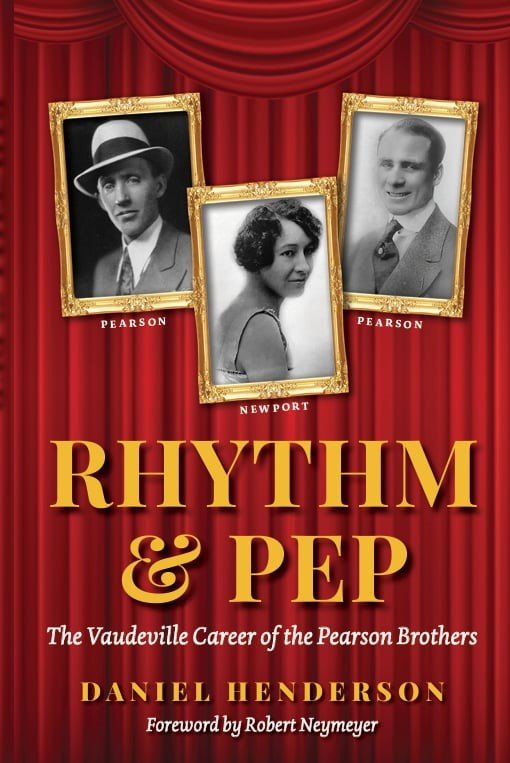
Rhythm & Pep: The Vaudeville Career of the Pearson Brothers
This is a non-fiction story of two Iowa brothers born in the 1890s near Clarinda, Iowa who had a dream of getting into show business. At that time, show business meant vaudeville. This narrative is based on the scrapbook that one of the brothers (Earl Pearson) left behind when he died in 1959. It is a story of talent and determination to get out of their father’s coal mines (near Clarinda, Iowa) and find a way into vaudeville through trial and error. They tried medicine shows, minstrel shows, and tent theaters and finally got a break in 1918 and landed a contract on the Keith-Albee Orpheum circuits. From 1918 until 1928, the brothers (along with the wife of one of them), performed from coast to coast in all the big-time Keith Theaters, including 7 appearances at the Palace Theatre in New York, and performed for President Woodrow Wilson in Washington D.C.
This narrative study will highlight artifacts from the scrapbook that include historic reviews, letters, pictures, newspaper articles, and contracts that create a timeline of their career. These artifacts have never been seen by the public before. The book will tie in the cultural developments of the US throughout this era and specifically shed light on the first mass entertainment industry, vaudeville. This is more of an “inside look” at vaudeville from the perspective of two Iowa boys who made it big.
The goal of the book is to bring to the public view the fascinating career of the Pearson Brothers (Earl & Carl) for the first time. Their story has never been told to a broad public before. It is meant to add to the rich cultural-entertainment history that has roots in Iowa. Additionally, the book is intended to add to the ongoing research and scholarship around the topic of vaudeville in general.
But their story doesn’t end even when vaudeville diminishes in the late 1920s and nearly disappears in the 1930s. The brothers reinvented themselves throughout the Depression Era and continued to perform until World War II. The final chapters recount their final performances and retirement at the end of WW II. With this comprehensive story, much is told about key trends and developments in the United States from the turn of the century until 1945.